In 1992, Willie Veasy was washing dishes in a busy Philadelphia restaurant, five miles from a shooting he had nothing to do with. His time card proved it. But hours later, inside an interrogation room, he signed a handwritten, nine-page confession describing the crime in detail: a blue four-door car, a gun passed in the back seat, two men firing at victims across the street.
Almost none of these details matched the eyewitness accounts. Witnesses described a two-door red or maroon car. They said only the front passenger exited. They described a close-range shooting of a single drug dealer, not a chaotic firefight. The confession didn’t just describe a crime Veasy didn’t commit. It described a crime that didn’t happen the way the confession said it did.
The jury saw the time card. They heard the contradictions. They convicted him anyway. A confession is that powerful. And the mechanism that produced Veasy’s confession is the one that should keep all of us awake at night: a polygraph “failure,” a machine dressed up as science, and the devastating human tendency to believe that if an instrument says you’re lying, maybe you are.
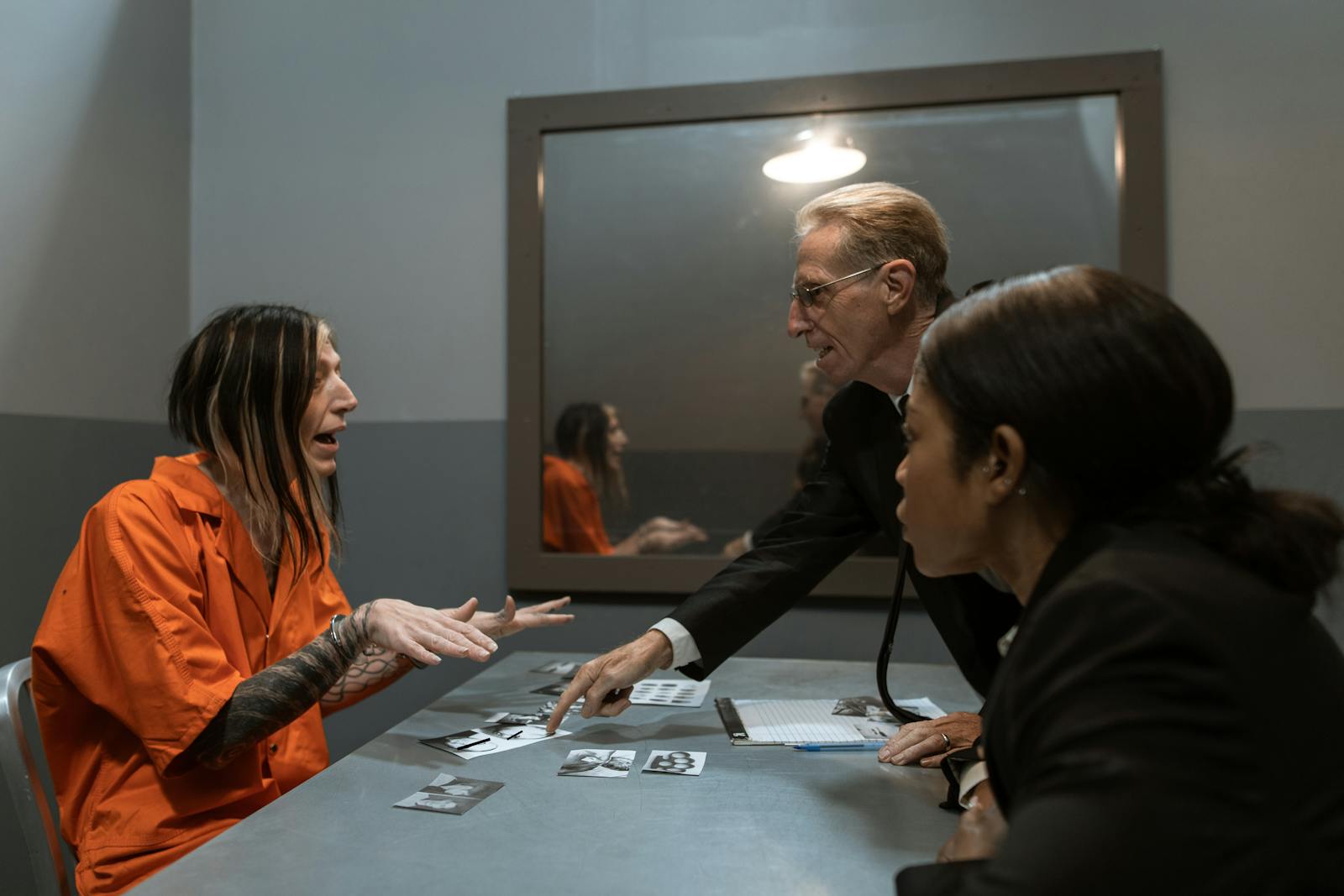
The Machine That Decides Before You Speak
The polygraph measures physiological responses including respiration, blood pressure, and sweat gland activity. It does not measure truth. The scientific community has raised serious concerns about the practice as pseudoscience, and yet it continues to occupy a central role in American interrogation rooms.
Research has found that even under ideal conditions, polygraph testing has significant limitations. A person could register a false positive simply because they are nervous, anxious, or intimidated by the test administrator. Medications, baseline anxiety disorders, and the sheer stress of being accused can all trigger the physiological responses the machine interprets as deception.
A 2003 report concluded that “almost a century of research in scientific psychology and physiology provides little basis for the expectation that a polygraph test could have extremely high accuracy.” The report recommended the U.S. Department of Energy stop using polygraphs entirely.
And still, officers walk into interrogation rooms, point to a printout, and tell a suspect: you failed.
What “You Failed” Actually Does to a Person
This is where the psychology gets brutal.
When a suspect is told they failed a polygraph, the message is not “this machine recorded elevated heart rate.” The message is: we already know you did it. There is no more room for your version of events. The science has spoken.
Many people do not know that polygraph results are generally inadmissible in court. Many people do not know the science is flawed. What they know is that an authority figure, in a position of enormous power, has just told them that a piece of technology has exposed them. That their body betrayed them.
The effect is disorienting. For someone who is actually innocent, it creates a cognitive crisis. How do I explain something even the machine says I’m lying about? The ground shifts. Reality becomes negotiable.
I’ve watched something similar happen in family court. When an authority figure states a version of events with enough conviction, people begin to doubt their own experience. I’ve sat across from abuse survivors who could barely articulate what happened to them, not because they couldn’t remember, but because someone had spent years telling them their perception was wrong. The interrogation room runs on the same mechanism, just compressed into hours instead of years.
The Moment an Innocent Person Starts to Believe
The false confessions research community identifies three categories of false confession: voluntary, coerced-compliant, and coerced-internalized. The third category is the one produced most reliably by polygraph failures, and it is the most insidious.
A coerced-compliant confessor knows what they’re saying is untrue but says it anyway to escape the situation. They’re exhausted, scared, overwhelmed. They want to go home. They’ve been told that cooperation will be rewarded. They calculate, often incorrectly, that the truth will come out later.
A coerced-internalized confessor goes further. Under the weight of sustained pressure, confronted with “evidence” that contradicts their own memory, they begin to genuinely doubt themselves. The polygraph result becomes the anchor. If the machine says I did this, maybe I did. Maybe I blacked it out. Maybe I’m not remembering correctly.
This is a specific psychological event, not a metaphor. The polygraph result operates as what researchers call a “false evidence ploy,” but it is uniquely powerful among such ploys because it claims to have measured the suspect’s own body. It doesn’t say someone else saw you do it. It says you know you did it. Your pulse knows. Your sweat knows. Your breathing knows. It turns the suspect’s own physiology into a witness against them.
Once that door opens, the details follow. Not from memory, but from suggestion. Interrogators often feed crime-scene details through leading questions, sometimes inadvertently, sometimes strategically. The suspect absorbs these details and weaves them into a narrative that sounds disturbingly specific. This is why false confessions often contain accurate crime-scene information. The information didn’t come from the suspect’s experience of the crime. It came from the interrogation itself.
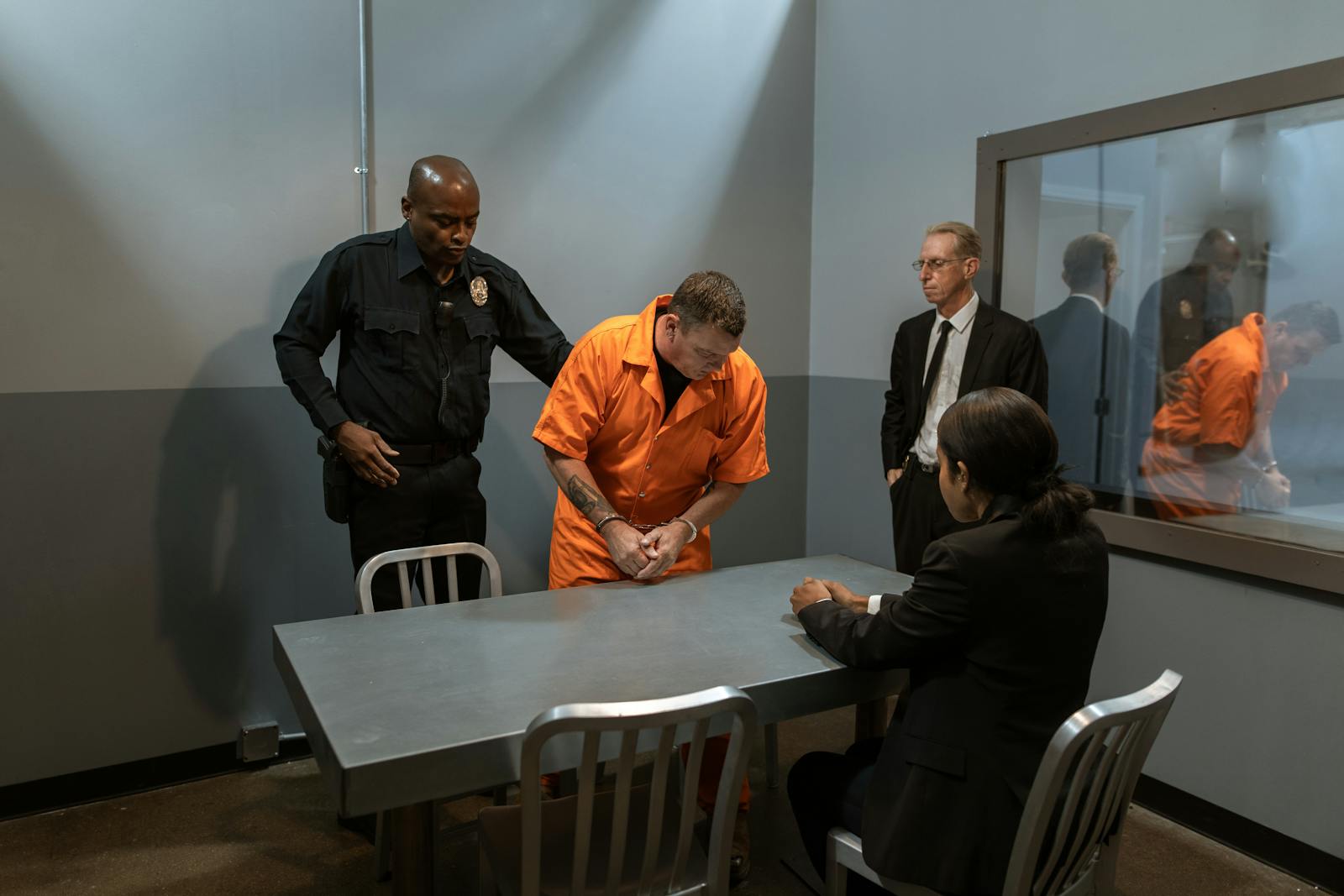
How the False Memory Gets Built
The process is more mechanical than most people realize. Once a suspect has accepted the premise that they might have done something they can’t remember, the interrogator becomes the architect of the memory itself.
“What do you think might have happened?” is the question that opens the construction site. The suspect, now untethered from their own recollection, begins to speculate. The interrogator shapes the speculation with nods, follow-up questions, and corrections. “You said the car was blue, right?” becomes a detail the suspect now owns. “And you were in the back seat?” becomes geography the suspect now inhabits.
American interrogation methods train detectives to act as “human lie detectors” who analyze behavior for signs of deception, despite decades of research showing that behavioral cues do not reliably distinguish truth from lies. Once detectives conclude someone is lying, the interrogation shifts. It is no longer about gathering information. It is about securing a confession. The polygraph result serves as the starting pistol for this process. “You failed the test” translates to: “We know you did it. Now tell us how.”
In Veasy’s case, the confession he signed described a blue four-door car. The actual car was red or maroon, two-door. His confession described a chaotic firefight. The actual shooting was a close-range execution. These weren’t details from Veasy’s memory. They were details from somewhere, fed into a man who had been told by a machine that his own denials were lies.
Why the Details Feel So Convincing to Juries
The prosecutor in Veasy’s case told the jury what prosecutors almost always tell juries: people who weren’t there don’t confess to murder. “It goes against everything you have ever known and all your common sense,” the prosecutor argued.
And that argument works because it feels true. It aligns with our intuition about how people behave. Why would anyone describe committing a crime they didn’t commit? Why would they know those details?
But the question contains its own answer. The details didn’t originate with the suspect. They originated with the interrogation. And the polygraph result is what made the suspect receptive to receiving them, because it dismantled the one thing standing between an innocent person and a false confession: their own certainty that they didn’t do it.
This is what distinguishes the polygraph-driven coerced-internalized confession from other forms of false confession. It doesn’t just break down resistance. It breaks down identity. The suspect doesn’t capitulate while knowing the truth. They lose access to the truth. They begin constructing a new version of events that is consistent with what the machine told them about themselves.
A System That Refuses to See Its Own Contradiction
Research from the Yale Law Journal has examined how false evidence ploys, including false polygraph results, can lead not only to false confessions but ultimately to false guilty pleas. The path from fabricated evidence to conviction does not require a trial. Many people who falsely confess under interrogation pressure later plead guilty rather than face the prospect of a jury hearing their own words used against them.
The confession becomes a gravity well. Everything orbits around it. Defense attorneys struggle to overcome it. Jurors can’t unhear it. Judges weigh it heavily. Once those words exist on paper or recording, the legal system treats them as the most reliable form of evidence available, even when the science that produced them is junk.
Courts have been slow to address this. Motions to suppress confessions obtained after false polygraph results are routinely denied. The legal standard asks whether the suspect’s will was “overcome,” and courts have generally held that lying about evidence, including polygraph results, does not meet that threshold.
This is a system that has formally acknowledged that polygraphs are too unreliable to be admitted as evidence at trial, and yet permits police to use those same unreliable results as leverage to extract confessions that are admitted at trial.
Read that again.
What Would Actually Help
Several states have begun restricting police deception during interrogations, particularly with minors. In the United States, police are legally permitted to deceive suspects during interrogation, including presenting fabricated evidence and claiming polygraph failures that may not reflect reality. Illinois and Oregon have passed laws limiting the use of false evidence ploys. These are meaningful steps, but they remain the exception.
Mandatory recording of interrogations, from start to finish, is one of the most effective reforms available. When Veasy was interrogated in 1992, Philadelphia did not require recordings. His entire confession existed only as a handwritten document that detectives claimed was contemporaneously recorded. There was no way to know what was said before the writing began, what questions were asked, or how long the interrogation lasted.
Recording alone won’t prevent false confessions. But it creates a record that allows courts, juries, and defense attorneys to evaluate the process that produced the confession, not just the product.
More fundamentally, jurors need to understand that the intuition prosecutors exploit, the belief that no innocent person would confess, is simply wrong. The data is clear. The cases are documented. Since the National Registry of Exonerations began tracking cases, consistently 20 percent of all exonerations have involved someone who confessed to a crime they didn’t commit. The mechanisms are well understood.
The problem is not a lack of knowledge. The problem is that the system benefits from the confession and has very little incentive to question how it was obtained.
What Twenty-Seven Years Does to a Person
Willie Veasy was finally exonerated after over 27 years in prison. Twenty-seven years for a crime his time card proved he couldn’t have committed. Twenty-seven years because a confession, built from details that didn’t even match the actual crime, was more persuasive to a jury than physical proof of his absence.
But exoneration is not restoration. Think about what it means to spend nearly three decades knowing you didn’t kill anyone, but also knowing that somewhere in a police file, in your own handwriting, is a nine-page document that says you did. Think about the specific psychological wound of having been manipulated into constructing a narrative of violence that you then had to live alongside for 27 years. Not just accused. Not just convicted. Made to participate in your own destruction.
Every false confession starts with someone who walked into a room believing the truth would protect them. For people like Veasy, the machine didn’t just fail to detect truth. It manufactured a new reality, one the suspect was psychologically coerced into building with their own words. And then the system called those words the most reliable evidence it had.
That is not a flaw in the system. That is the system working exactly as designed. And until we reckon with the specific mechanism, the polygraph “failure” that turns an innocent person into the author of their own false history, we will keep producing Willie Veasys. We will keep calling their coerced words proof. And we will keep pretending we didn’t know.
Photo by RDNE Stock project on Pexels