The exoneration case files from the Innocence Project include a recurring detail that unsettles anyone who reads them closely: people who did not commit the crime describing it in the first person, sometimes with details the police fed them, sometimes with details they seem to have invented on their own. They sign the statement. They read it aloud on video. Some of them cry. And then, years later, DNA evidence clears them, and the question that lingers is not whether the confession was false but how anyone, sitting in a small room with two detectives, could ever be brought to say those words at all.
The intuitive answer is that they cannot. The folk belief is plain: people who were not there, who had nothing to do with it, simply do not confess to serious crimes. It goes against instinct, against self-interest, against everything most people believe about themselves.
And yet they do. Regularly enough that researchers have spent four decades trying to understand the mechanism.
What the numbers actually show
Among DNA exonerations, false confessions appear in a meaningful share of cases, particularly homicides and cases involving young or cognitively vulnerable suspects. The exact percentage varies by dataset and by how narrowly “false confession” is defined, but the pattern is consistent across studies: confessions from innocent people are not vanishingly rare, and they are disproportionately concentrated in the most serious cases.
As explained in a detailed overview published by The Appeal, what emerges is a picture that pushes against intuition. The people who falsely confess are not primarily lying to protect someone else, and they are not primarily doing it for attention. Most of them are trying to end the interrogation.
What sixteen hours does to a person
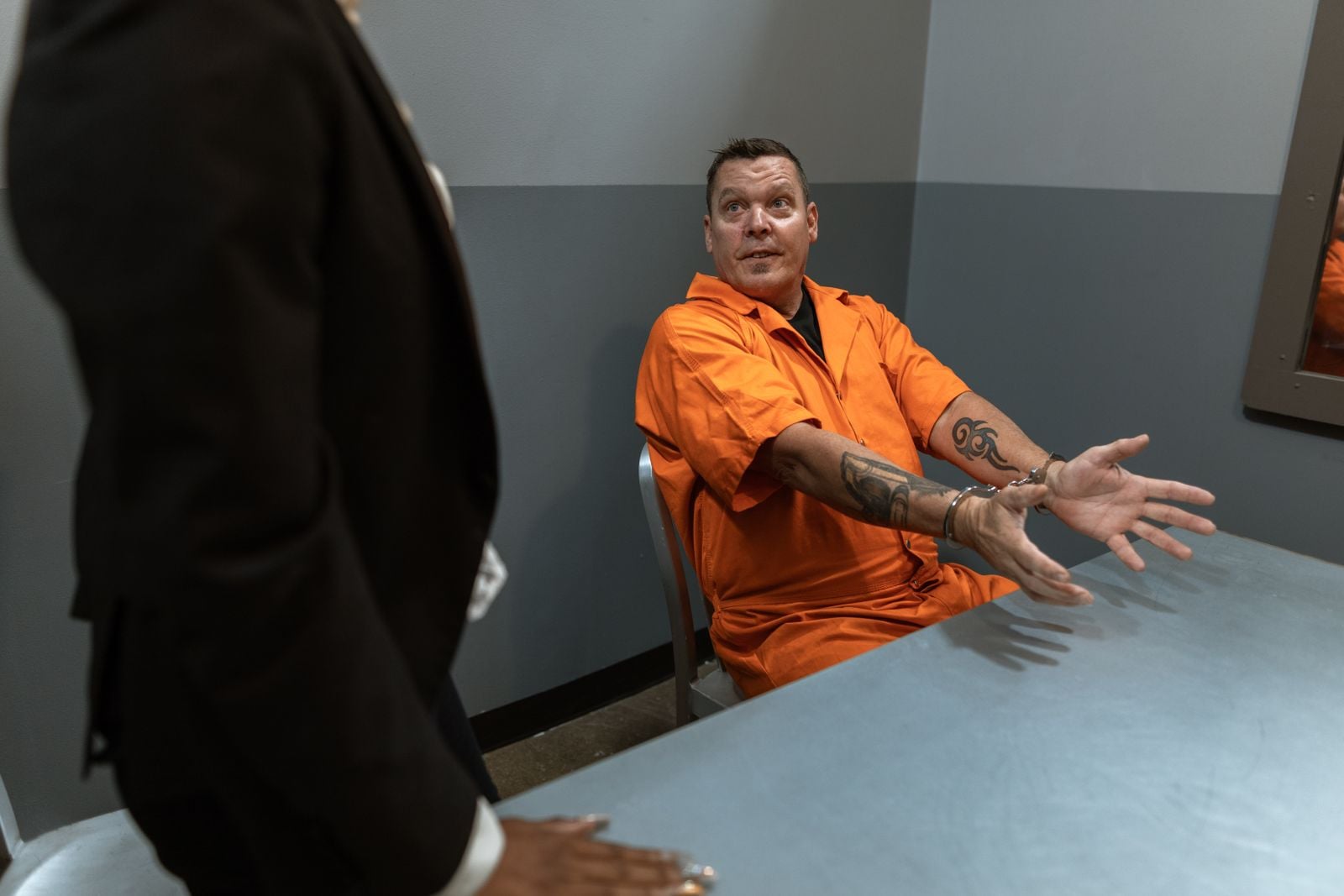
The average interrogation in the United States runs a fraction of the time that produces a false confession. Reviews of documented false-confession cases show interrogations lasting six, ten, sixteen, sometimes more than twenty hours. At those durations, the person in the chair is no longer the same person who walked in.
A 2016 study led by Michigan State University’s Kimberly Fenn, reported by The Christian Science Monitor, found that participants kept awake for 24 hours were roughly 4.5 times more likely to sign a false confession to an act they did not commit than participants who had slept. The study used a laboratory setup, not a real interrogation, and its findings should be read as a demonstration of a mechanism rather than a measurement of what happens in any specific case. But the mechanism is well established: cognitive control degrades sharply after a night without sleep. Judgment about future consequences fades. The immediate desire to make the discomfort stop overwhelms almost everything else.
Trial attorneys who handle post-conviction work often describe a similar arc in the recordings they review. The suspect denies the crime for hours. Then, at some point, the denials slow. Then the person starts agreeing with propositions instead of asserting facts. Then the confession comes.
Three routes to a false confession
False confessions generally fall into three broad categories, a framework developed by Saul Kassin and Lawrence Wrightsman in the 1980s and refined since.
The first is voluntary. Someone walks into a police station and confesses to a crime they did not commit, sometimes to protect another person, sometimes because of a psychological condition, sometimes because a high-profile case draws people who want to insert themselves into it.
The second is compliant. The suspect knows they did not do it, but confesses anyway because the interrogation has become unbearable, because they believe the confession will let them go home, because they have been told cooperating is the only way to avoid a harsher outcome. This is the most common form and the one most sensitive to interrogation length and technique.
The third is the strangest, and the one that lay observers find hardest to believe. It is called internalized. The suspect comes to genuinely doubt their own memory, and in some cases comes to believe they committed the crime.
How a person starts believing they did something they did not do
The internalized false confession sounds like something out of a bad novel until the actual mechanisms are laid out. Forensic psychologists who study this pattern call it memory distrust syndrome, a term Gisli Gudjonsson and James MacKeith coined in the early 1980s to describe what happens when a person’s confidence in their own recollection collapses. The recurring elements show up across documented cases: extreme fatigue, isolation from anyone who could reality-check the suspect’s account, repeated presentation of fabricated evidence, and confident assertions by interrogators that the suspect committed the act and simply does not remember doing it.
That last piece is the hinge. In many US jurisdictions, police are legally permitted to lie to suspects about evidence. They can say fingerprints were found at the scene when none were. They can say a co-defendant has already implicated the suspect. They can say a polygraph, which is not admissible as evidence in most courts, indicated deception. When a person who has not slept, has not eaten well, and has been in the same room for twelve hours is told confidently and repeatedly that objective evidence proves their guilt, some of them begin to look for an explanation. A blackout. A dissociative episode. A repressed memory.
Human memory is reconstructive, not archival. Under the right suggestive conditions, people can be led to generate detailed, emotionally vivid memories of events that never happened. Work on the misinformation effect established this in laboratory settings starting in the 1970s. When those techniques appear, even inadvertently, in an interrogation, the room becomes the wrong environment for a person to sort real memory from suggested memory.
The Reid technique and what replaced it
For most of the last half-century, American police interrogation training was shaped by the Reid technique, a nine-step method built around confronting the suspect with a confident assertion of guilt, minimizing the moral weight of the crime, and offering face-saving explanations that make confession feel like the reasonable path forward. The technique was designed to overcome the resistance of guilty suspects. Critics have argued for years that its pressure-based structure also produces false confessions from innocent ones.
An alternative approach, adapted from British PEACE-model interviewing, focuses on information gathering rather than confession seeking. Reporting from Iowa State describes the effort to compile evidence-based interviewing methods into training materials for law enforcement, drawing on more than 60 published studies. The core shift: ask open-ended questions, let the suspect talk, look for inconsistencies against known evidence, and do not tell a suspect what happened before finding out what they say happened.
Some large US departments have moved toward this model. Many have not. Training reforms move slowly, and confessions, whether reliable or not, remain among the most persuasive pieces of evidence a prosecutor can put before a jury.
Why juries believe confessions even when they should not
Across documented cases, a confession proves close to devastating as evidence, even when jurors are told the confession was coerced, even when they are shown the interrogation tape, even when they say in post-verdict interviews that they discounted it. The confession lodges. Something in the way people reason about self-interest tells them that no one would say the words unless the words were true.
This is where the courtroom psychology becomes especially difficult. Judges instruct juries to consider the totality of circumstances around a confession. Defense attorneys hire experts to walk juries through the psychology of interrogation. And yet the confession, once heard, tends to carry the case. In several documented exonerations, jurors have said afterward that they convicted primarily on the confession, even when physical evidence pointed elsewhere.

Who is most at risk
The risk of a false confession is not evenly distributed. Adolescents, people with intellectual disabilities, people with serious mental illness, and people who are heavily fatigued or intoxicated appear repeatedly in the documented cases. A study of forensic patients published in Frontiers in Psychiatry examined self-reported behavior during police interviews and highlighted the ways psychiatric vulnerability shapes both confession and denial patterns. The finding relevant here is not that vulnerable suspects are always more compliant, but that the standard interrogation environment does not adjust for the specific ways their reasoning under pressure differs from a baseline suspect.
Juvenile cases are particularly stark. Teenagers are more likely than adults to prioritize the immediate goal of leaving the room over the long-term consequences of signing a statement. They are more likely to believe that telling the truth later will fix whatever they say now. Custody disputes and juvenile court proceedings show a similar pattern in a different register, where young people confess to things they did not do in order to end a conflict with an authority figure.
A broader survey of the research literature, published in Frontiers, traces the science-based pathways to understanding false confessions and the wrongful convictions that follow from them. The overlapping risk factors, extended interrogation, sleep deprivation, deceptive tactics, and suspect vulnerability, appear in case after case in a way that is now difficult to dismiss as coincidence.
What the reforms have and have not fixed
Mandatory recording of custodial interrogations, once rare, is now required by statute or court rule in a majority of US states, though the specifics vary widely by jurisdiction and by the seriousness of the offense. Recording changes what happens in the room, and it gives judges and juries a chance to see the interrogation rather than only the confession that resulted from it. It does not, on its own, prevent a false confession. It only preserves the evidence of how one was produced.
A smaller number of states have passed laws restricting police from using deception with juvenile suspects. Illinois was the first, in 2021. Others have followed. No state, at the time of writing, categorically bars deception with adult suspects, and courts have generally held that lying about evidence during interrogation does not, by itself, render a confession involuntary.
The gap between what the research has established and what the law requires remains wide. This is general information about a well-documented pattern, not legal advice, and the specific rules governing interrogation vary significantly by state and by the age and status of the person being questioned.
The pattern underneath the pattern
What the accumulated research keeps pointing to is not a story about bad detectives or weak suspects. It is a story about what happens when a technique optimized to produce confessions meets a human mind that has been kept awake, kept isolated, and kept uncertain about what is true.
Under those conditions, the mind starts looking for an exit. Some people find it by lying, knowing they are lying, planning to correct the record later. Some people find it by starting to wonder if the confident voice across the table might know something they do not. And a smaller number, the ones whose cases feel most impossible to outsiders, find it by rewriting their own memory in real time.
The Innocence Project files are full of people whose signed statements read like guilt and whose DNA years later read like innocence. The distance between those two documents is measured in hours in a room.