In the open Atlantic, a small group of sperm whales hangs suspended just beneath the surface, noses pointed at the sky, flukes dangling into the blue below. They are not dead. They are not hunting. They are asleep — profoundly, silently, and only for a quarter of an hour at a time. The largest-toothed predator on Earth naps standing up.
This peculiar behavior was first documented in detail in a 2008 Current Biology paper by a team led by biologist Patrick Miller at the University of St Andrews’s Sea Mammal Research Unit, working with colleagues Kagari Aoki, Luke Rendell and Masao Amano. Using suction-cup tags on 59 sperm whales in oceans around the world, they showed that Physeter macrocephalus conducts passive “drift-dives” in stereotyped vertical postures just below the sea surface. The behavior has since been observed off Norway, Dominica, and the Azores. Whales drift vertically in tight clusters of roughly five or six individuals, and each bout lasts about 10 to 15 minutes before the pod stirs, exhales, and rises to breathe. It is among the shortest and strangest sleep patterns in the animal kingdom — and researchers are still uncovering the physics that make it possible.
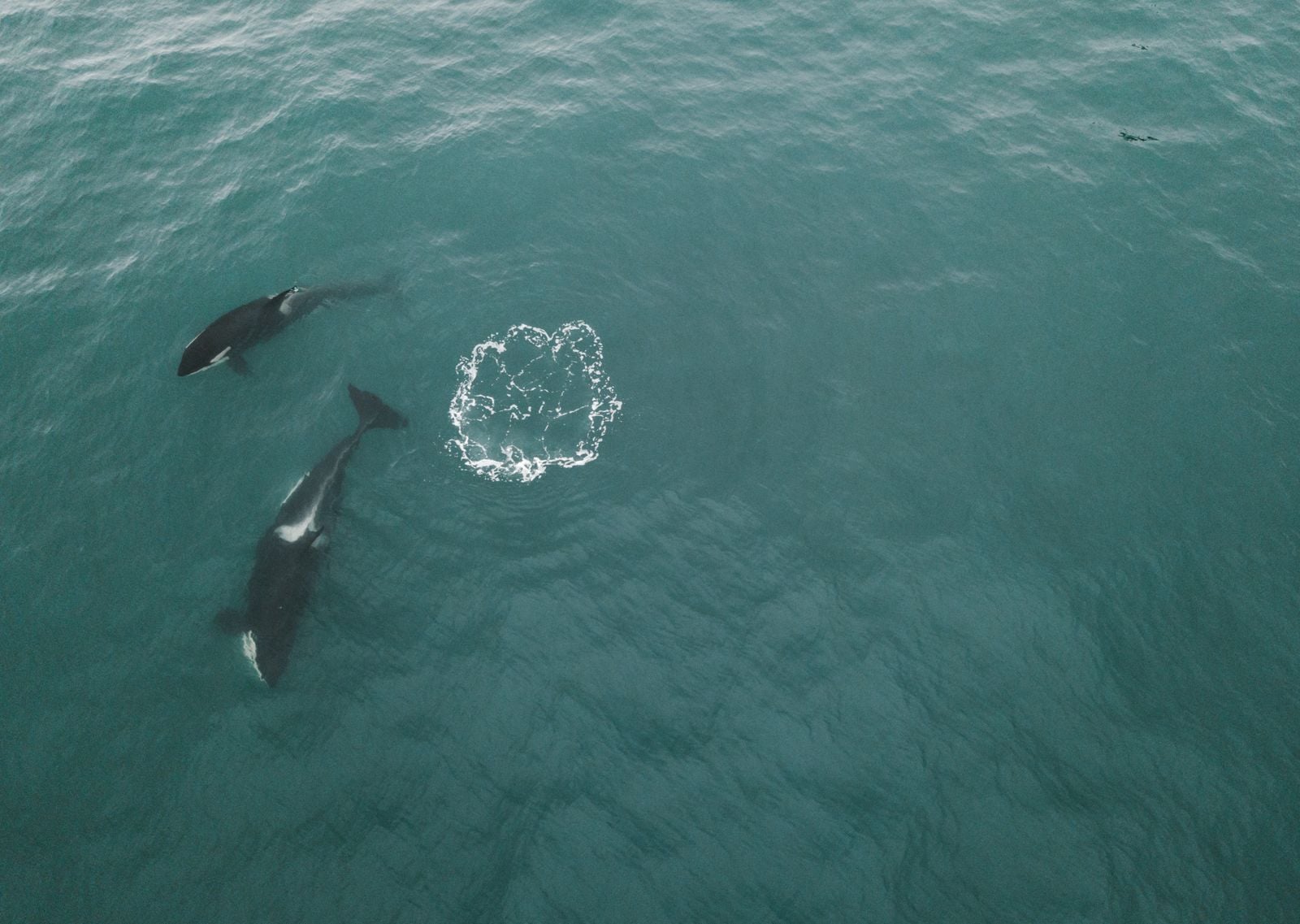
An accidental discovery off Northern Chile
The vertical-sleep phenomenon crystallised in two ways. Miller’s team was tagging sperm whales to study foraging dives and echolocation clicks, and the tags kept recording long, quiet stretches at shallow depths — data that looked like nothing until someone considered they might be looking at rest. Separately, in October 2000, a research vessel off Northern Chile drifted into a small pod of vertically hanging whales that did not react at all until the boat inadvertently bumped one of them awake. That footage — combined with the tag data — revealed something biologists had long suspected but never confirmed. Sperm whales sleep so deeply during these episodes that they can be approached without detection, a vulnerability that helps explain why the naps are brief and clustered. In Miller’s dataset, drift-diving accounted for only about 7 percent of tag time, making it one of the least sleep-dependent lifestyles among mammals.
Why vertical, and why in groups
Sperm whales are the largest toothed predators on the planet. Their enormous heads — roughly a third of body length — house the spermaceti organ, a waxy structure once prized by whalers and still central to how the animals echolocate. That head is also densely buoyant, which shapes the geometry of their rest.
According to recent research covered by Discover Magazine, sleeping sperm whales release small streams of gas bubbles — up to 36 discrete releases in a single resting bout — to fine-tune their buoyancy and keep from bobbing to the surface. The head wants to float; the body wants to sink; the bubbles hold the balance. The result is a nearly motionless vertical drift, sometimes described by observers as a forest of gray trunks hanging in the water.
The group formation is equally deliberate. Sperm whales are intensely social, particularly the matrilineal units of females and juveniles that spend most of their lives together. Resting together in tight clusters likely provides collective vigilance against predators such as orcas, which have been documented attacking sleeping or isolated whales. If one animal wakes, the entire pod tends to stir.
The bubble mechanism
The bubble-release finding was published in July 2026 in the Journal of Experimental Biology by Noémie Freymond of the Université de Neuchâtel, with Alec Burslem and Patrick Miller of the University of St Andrews. The team deployed acoustic and motion tags on 42 sperm whales in the Lofoten Islands off northern Norway, and their data transformed how biologists understand cetacean sleep. As the University of St Andrews reported, the whales are actively “deflating” themselves — using controlled gas emissions to counteract the natural lift of their oil-filled heads.
This is not passive drifting. It is buoyancy engineering. A detailed writeup at EcoPortal describes how the whales appear to trim themselves like submarines, adjusting the amount of gas in their lungs and airways to hover at a precise depth. Too much air and the head lifts them into the swell; too little and they slip downward into the dark, out of reach of the surface breath they will need in minutes.
Additional documentation from the tagged whales off Norway confirms that the bubble emissions are patterned — whales resting close to the surface released around 11 bubbles per nap on average, while those drifting up from deep dives released only three or four, matching what physics would predict as ambient pressure changes.
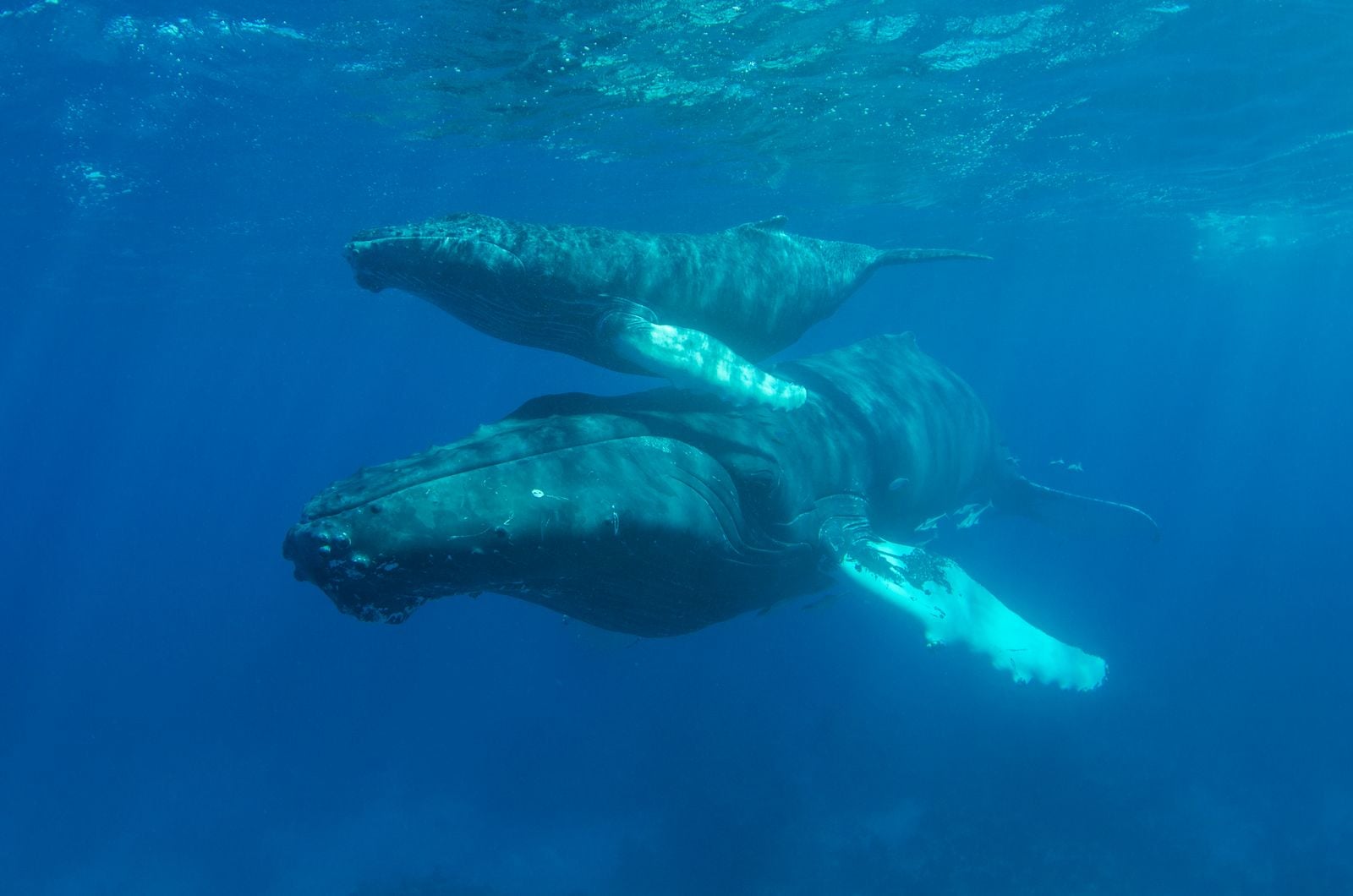
Half a brain at a time — or something stranger
Most cetaceans studied to date, including bottlenose dolphins and beluga whales, sleep unihemispherically: one half of the brain rests while the other stays alert enough to surface and breathe. Sperm whales appear to break this rule. The depth of their inattention during vertical rest, combined with the fact that they hold their breath rather than surfacing rhythmically, suggests they may engage in bilateral sleep, though this remains under investigation.
If confirmed, that would make the sperm whale one of the very few marine mammals capable of full bilateral sleep. It would also explain the extreme brevity of the episodes. A whale that cannot monitor its surroundings and cannot breathe automatically must wake before oxygen runs low — and before drifting too far from its pod.
As Popular Science has noted in its coverage of the Freymond study, sperm whales engage in synchronized group sleep — a behavior with clear parallels to the social sleep of primates and other tight-bonded mammals, and another line in a growing biography of a genuinely alien intelligence.
Sleep, birth, and the social fabric
The vertical sleeping formations are only one facet of an unusually cohesive social life. On July 8, 2023, Project CETI researchers led by biologist Shane Gero, working off the island of Dominica, recorded a sperm whale birth up close for the first time. As National Geographic documented, other members of the pod acted as attendants, supporting the mother and helping the newborn calf reach the surface for its first breath. The footage revealed a level of coordinated care that mirrors the same tight bonds evident in group sleep.
Those bonds are also what make disturbance so consequential. A pod jolted awake by boat traffic or seismic surveys does not simply lose rest — it loses the synchrony that governs when to breathe, when to dive, and when to nurse. Sleep, in a sperm whale, is not a private act. It is a group performance held together by physics, physiology, and something that looks a great deal like trust.
Watching the sleepers
For sailors and researchers who have encountered a resting pod, the sight is difficult to forget. The whales hang like columns of dark stone, tails vanishing into deeper water, blowholes just below the surface, the sea moving around them without moving them. There is no sound — no clicks, no calls, no exhalations. For 10 or 15 minutes, the largest brains in the ocean go quiet.
Then, without any visible signal, the pod rises. Breath returns in a series of angled spouts. The animals roll, orient, and are gone into the deep again, back to hunting squid a mile below the light. The nap is over, and the ocean keeps its secret until the next one.